
Uzbekistan: UN Committee is concerned about violations of the rights of homeowners
The UN Committee on Economic, Social and Cultural Rights considered the Third Periodic Report of Uzbekistan at its meetings held on February 22-24, 2022, and adopted concluding observations on March 4, 2022.
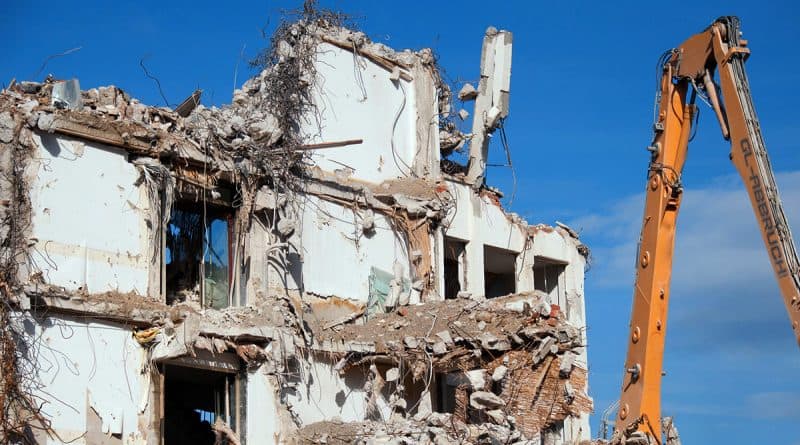
The Committee deplores reports of property expropriation, house demolitions and forced evictions in view of urban development projects. It’s also concerned about reports of non-compliance with the national legal framework regarding dispossession, especially the lack of prior consultation with affected residents and the lack or insufficiency of compensation and alternative housing.
The Committee recommended that the state party activate its efforts to provide affordable and social housing, including to residents of Sardoba district who lost their houses as a result of the flood in May 2020. The aid group included the disabled, Lyuli gypsies, refugees, stateless persons and asylum seekers.
By the meeting, six activists from Uzbekistan presented their alternative report on violations of the right to adequate housing. The authors of the report point out that forced evictions in recent years have led to inequality, social conflicts, segregation and invariably affect the poorest and most socio-economically vulnerable groups of the population – women, children, minorities and the disabled. The official statistics of the Ministry of Justice are given: 846 demolitions without warning, 1388 cases of demolition with non-observance of warning terms, 1244 demolitions without preliminary assessment, 430 demolitions without compensation.
On May 1, 2020, the dam of Sardoba reservoir broke. As a result, the Syrdarya river flooded the settlements and villages located downstream. Large-scale flooding damaged and destroyed houses and disrupted the usual way of life of 60,450 people in 22 settlements of Sardoba, Ak Altyn and Muzrabad districts of Syrdarya region. 2,570 houses were demolished by the elemental forces of nature.
Then problems began in the distribution of housing among the residents of the affected areas, as a result of which 147 houses were unreasonably allocated to citizens who didn’t have the right to this. At the same time, 99 citizens, who had the legal right to housing, didn’t receive it from the state. In some cases, compensation was disproportionate to the damage.
The authors of the report cite violations of specific norms of the current legislation of Uzbekistan. In particular, in accordance with Article 2 of the Law of the Republic of Uzbekistan “On the protection of private property and guarantees of the rights of owners” dated September 24, 2012, the private property is inviolable and protected by the state. The owner may be deprived of his/her property only in cases and in the manner prescribed by law.
Not relying on the justice of the state, which protects the interests of businessmen, people in desperation tried to defend housing at the cost of their lives. The alternative report provides examples of how life is being destroyed due to the arbitrariness of the authorities.
A 33-year-old man from the village of Tailak (Samarkand region) set himself on fire in front of officials who came to demolish his house. Later the man died in the hospital. His mother, who tried to stop the fire, was hospitalized with burns to 40% of her body.
In Andijan, bailiffs came to confiscate the house of 31-year-old owner, who set himself on fire during this visit and later also died in hospital.
In Karakalpakstan, in September 2017, a 29-year-old teacher tried to set himself on fire and jumped off the roof when bailiffs came to bulldoze the premises. Then he ended up at the hospital.
In Namangan, a 35-year-old woman (mother of two children) set herself on fire in front of bailiffs who came to evict her family. She died in the hospital. The confiscated property was acquired in accordance with the law, but not registered (presumably due to some technical errors).
In Karshi, a woman doused herself with gasoline and tried to set herself on fire in front of the Prosecutor’s Office when officials refused to accept her request for the demolition of her house.
79 households were demolished on the night of September 29-30, 2018 in Sebzor massif in Tashkent with the participation of the prime minister, the head of the city, employees of the internal affairs bodies and other officials. The land was to be freed from residential buildings and given over to the construction of the Embassies of India and Tajikistan. Residents claim that there were no official notices. They had only several Saturday hours to move. The bulldozers began the demolition while people and their belongings were still inside the houses. Only at the beginning of 2020, people began to move to a new permanent place of residence – in a 12-story apartment building. It’s worth noting that until today, no construction has been carried out at the place where people were evicted overnight.
Activists also note that the demolition of monuments in the historical parts of the country’s cities erases precious evidence of the way of life and culture of the Uzbek people.
The Committee on Economic, Social and Cultural Rights is a UN treaty body that monitors the implementation of the International Covenant on Economic, Social and Cultural Rights. The Committee has 18 members who are elected by the UN Economic and Socia/wpyears. It studies the reports of the states-participants of the above-mentioned international pact, then presents its proposals for the development of the sphere of human rights protection.