In Uzbekistan, authorities use forced labor of teachers and doctors
During the preparation for the President’s visit, regional officials began using public sector employees for cleaning.
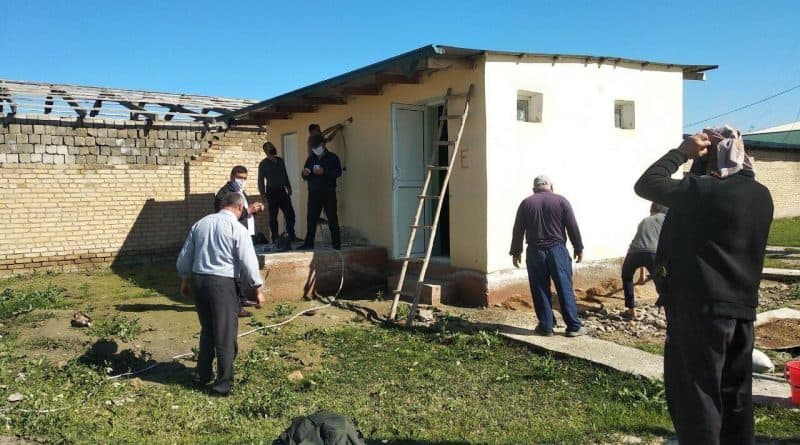
On May 27, Botir Radjabov (the head of the administration of Narpay district of Samarkand region) ordered schools’ directors to use teachers to repair and clean street toilets in educational institutions. Askar Rustamov (Radjabov’s Deputy for Youth and Social Policy) supervised the work of forced teachers-repairers.
The editorial office has the pictures, how teachers do internal and external whitewashing.
On May 25, employees of medical institutions of Margilan told journalists that they had been sent to clean up the Craft Center.
An employee of one of the clinics said that five employees of their clinic were sent to clean the building of the newly built Center for craftsmen. “I also went with them,” said the doctor. “We washed the windows. The floor was in terrible condition in the building. It was whitened, and it was impossible to wash it. Today, five more of our employees were taken there.”
City authorities forced doctors to work in waiting of the arrival of the President Mirziyoev in the city. “In 2019, he signed the law toughening the punishment for forced labor,” the press service of the Ministry of Justice said. According to the document, responsibility for administrative enforcement to work was increased. The amount of the fine increased ten times and amounted to more than $200.
According to an expert of ACCA, “forced labor, despite the assurances of senior officials, remains an integral part of the administrative command system. At any time of the year, enslaving dependence on bureaucratic tyranny continues to characterize the country as a worthy heir of the Soviet past.”
Uzbekistan had previously ratified the Convention No.144 on tripartite consultation to promote the application of international labor standards and the additional protocol to the Convention No.29 on forced labor. If the population even knows this, it doesn’t have special hopes for the obligation of the state. Fear of dismissal and sanctions on the part of the administration force to do an unusual work of budgetary organizations’ employees.
Functionaries of various parts of the state apparatus disguise the forced labor by carrying out hashars – an old tradition of voluntary collaboration. The habit of using free labor didn’t prevent the government, even during the coronavirus pandemic, from ordering to hold the popular charity hashar for beautifying and gardening “Obod yurt” [“Landscaped country”], in which millions of citizens were not involuntarily involved.