
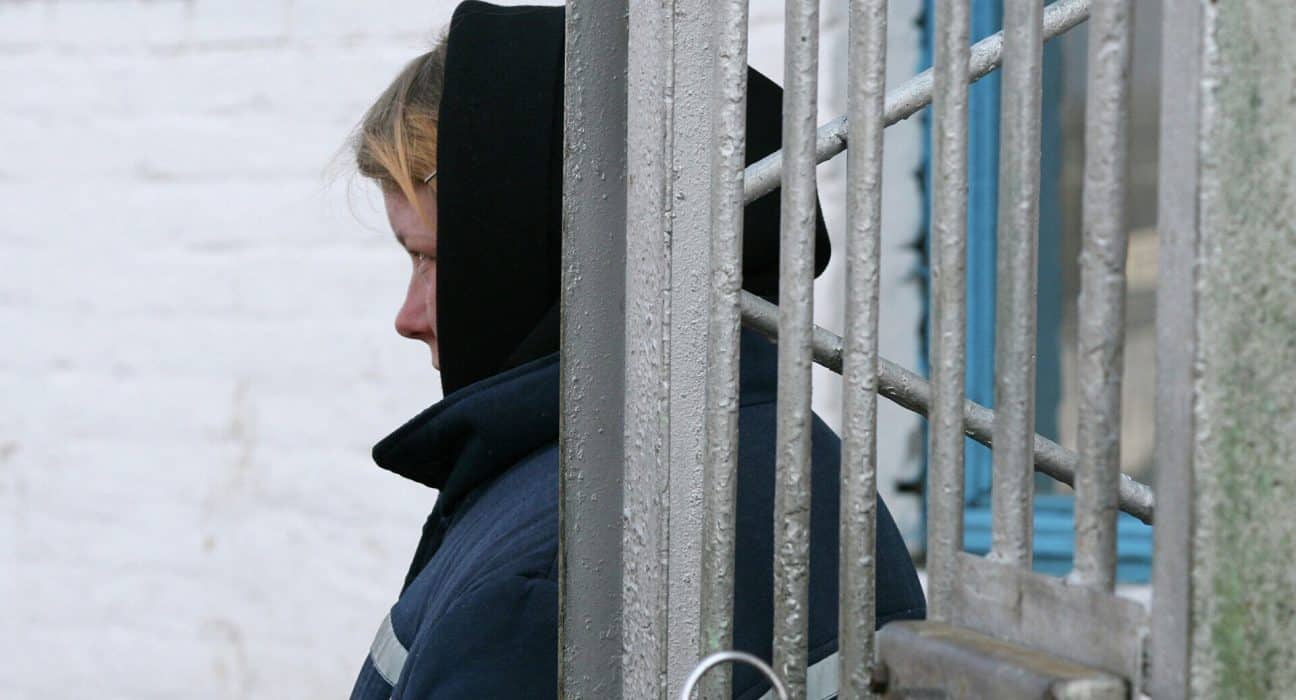
The President of Kazakhstan, Kassym-Zhomart Tokayev, signed a decree pardoning Natalya Slekishina, who was raped by the warden of the pre-trial detention center ЛA-155/18 Ruslan Khakimov. Elvira Azimova, the Ombudsman of the Republic of Kazakhstan, explained that the act of pardon against Slekishina is the state’s recognition of the fact of violence.
As previously reported by ACCA, 32-year-old Natalya Slekishina was convicted in 2015 in Taraz for a staged robbery committed for the purpose of large-scale theft of property. After a while, Slekishina was transferred to Almaty. And in December of the same year, it turned out that the woman was pregnant. As reported by Slekishina herself, she was gang raped by the employees of the institution.
“While in prison, I got pregnant from 4 employees,” Slekishina told reporters after the birth of her daughter. “A criminal case was opened against them. Employee Ruslan is the officer of the criminal investigation department, Bauyrzhan is the head of the regime, Lazizbek is the point duty officer and Bauyrzhan is the foreman. It was a gang rape.”
Natalya also noted that she tried to announce publicly the fact of rape, but the administration of the institution actively obstructed her in this, not accepting her statement, and then completely convoyed the woman to Karaganda.
As the deputy head for educational work of this institution, Sergei Kurilov, told the Kazakh TV channel KTK that the convict first accused one employee, then two, then three.
“She adds these names every time. In general, it’s not even a fact that they are. Well, in this regard, I can say that this is the first time in our penitentiary system. We have never had such facts before,” he emphasized.
However, the genetic examination showed that the father of Nazira, who was born in the colony, is the warden Ruslan Khakimov.
Despite this, at the trial, Khakimov, who, by the by, was the only accused in the dock (the other three ducked out). He didn’t admit his guilt, saying that Slekishina had sex with him voluntarily.
By the end of the trial, the list of articles brought against Khakimov was expanded. In addition to repeated facts of rape and abuse of authority, he was also charged with the use of torture.
By the court decision, Khakimov was found guilty and sentenced to 9 years in prison in a general regime colony. In addition, the court ruled to deprive Khakimov of the special rank of Major of Justice, and also to deprive him of the right to hold positions in the civil service for life. The court set the date July 16, 2016 as the beginning of the sentence.
In February 2017, the court gave Natalya Slekishina a 5-year delay in serving her sentence (until February 2022) in connection with the birth of her child, and the woman was released.
Meanwhile, on June 18, 2019, the Zharma District Court of the East Kazakhstan region, by its ruling, replaced Khakimov with the remaining unserved part of the sentence with restraint of liberty. In July of the same year, he was released. As explained in the Committee of the Penitentiary System, this decision was made due to the exemplary conduct of the ex-warden.
However, Khakimov didn’t manage to enjoy freedom. Slekishina stated that she didn’t agree with this decision, since the warden not only didn’t pay her in full the moral damage, but also evaded paying alimony. Due to the resonance that arose on this matter, in November 2019, the decision on early release on parole was canceled, and Khakimov was returned to prison.
Now it became known that the President of Kazakhstan had pardoned the convicted Slekishina.
“In most cases, pardon is applied to persons who have committed a crime unintentionally, by coincidence. In the case of Natalya Slekishina, the act of pardon is also associated with the recognition by the state of the fact of violence committed against her by law enforcement officers. The so-called prison violence is recognized all over the world as one of the forms of cruel treatment against a person using his/her dependent position. Within five years, she proved herself to be a good mother of three children, found a job and was economically self-sufficient. There were no complaints about her behavior during the period of probationary control. The act on her pardon adopted by the President of Kazakhstan is an act of mercy and humanity, trust on the part of the state,” said the Ombudsman Elvira Azimova in this regard.


Leave feedback about this