
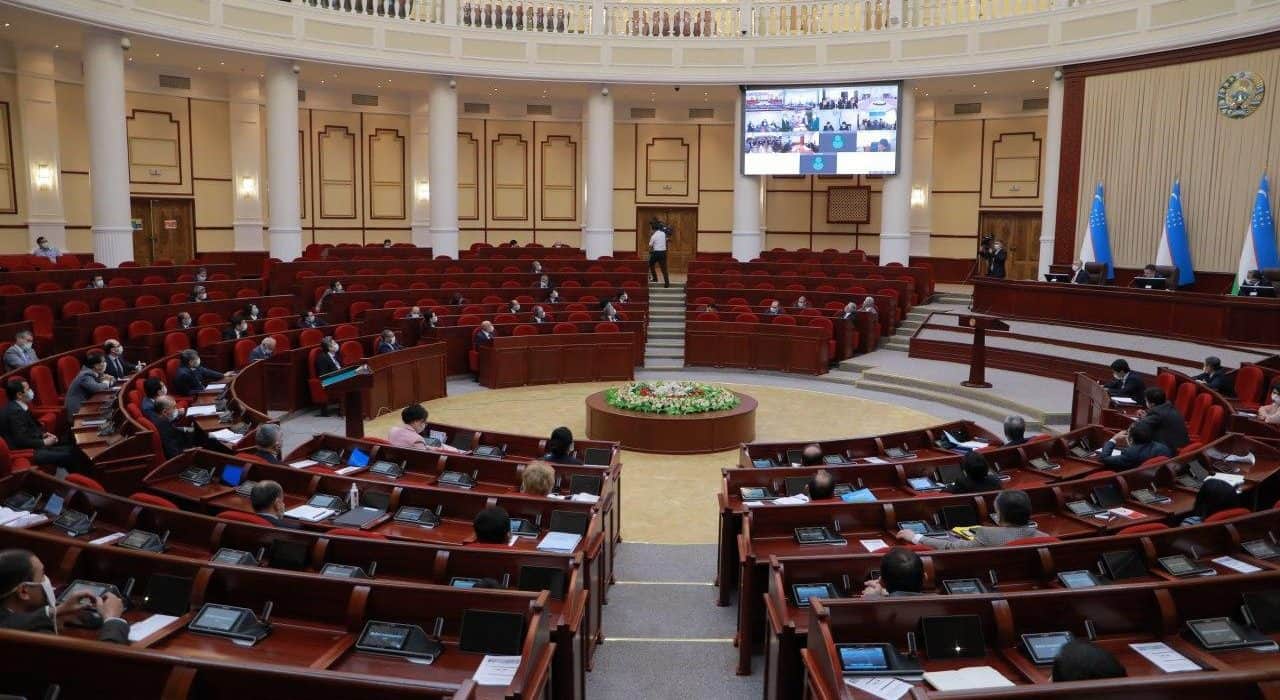
On December 21, information about the tenth plenary session of the Oliy Majlis [Senate] was published. It states that “the possibility of repeated revision of court decisions, that have entered into force, creates conditions for the parties concerned to be doomed to suffer for several years due to the state of uncertainty in the court case, which ultimately undermines the reputation of the judicial system, forms a negative attitude of citizens and the public towards the courts, and it is also the reason for the emergence of distrust to the legal system”.
It is planned to create a three- level judicial system in accordance with international standards: the first instance is the district (city) courts, and in certain categories of complex cases – the regional courts, the appeal instance – the regional courts, the cassation instance – the Supreme court. Also, the supervisory authority, which, according to the senators, was the cause of the discontent of international organizations and experts, would be completely abolished.
It is planned to shorten the appeal period from one year to 20 days. Uzbek lawyer Abbos Salaydinov has no doubts that it’s a treason in relation to the rights of persons, who have faced and may face injustice in court in the future. In his analysis, he notes the lack of publicity in the process of discussions: in the Legislative Chamber, the public was not provided with any detailed information about these laws. There is no detail in the Senate’s report either.
According to the current legislation, if the plaintiff missed the deadline for filing an appeal, he has the right to file a cassation appeal within 6 months. During this time, there will be an opportunity to collect evidence to win the case.
According to the information available to the lawyer, if the claimant doesn’t immediately decide on the appeal within the prescribed period, then he will not be able to appeal the decision of the first instance court at all.
Abbos Salaydinov notes that if citizens are deprived of the opportunity to choose a second instance (appeal or cassation procedure), and their rights to justice from universally recognized international norms and the Constitution are limited by the compulsory establishment of the appeal procedure for considering a case in cassation, the image of Uzbekistan will be undermined on the world arena. Such a sharp change in the institution of appeal against judicial decisions is also contrary to the Universal Declaration of Human Rights.
The Declaration established that in case of violation of the rights granted to a person by law, there is a real possibility of effectively ensuring these rights in the courts. The lawyer asks, “On the experience of which foreign states did the deputies rely on when developing this bill?”
“The authors of the changes are unknown, but they are definitely not a product of the analysis of the elected representatives of the people,” the ACCA expert is sure. “The initiative belongs to the representatives of the judicial system with the approval of the presidential administration, through the filter of which all law-making of the country passes.”
ACCA previously wrote about another bill. After the approval of the amendments by the President, the Code of Administrative Responsibility provides for punishment “for posting information that promotes violations in this area, including violence and cruelty in the media, telecommunications networks or the Internet”.
The elected representatives of the people assess the innovations as “important aspects of ensuring freedom of speech and information”. In practice, this will negatively affect the civil activity on the network.


Leave feedback about this