

Against the background of events in Belarus, the Ministry of Internal Affairs of Uzbekistan promptly posted for discussion a bill on rallies, meetings, and demonstrations. The document is open for discussion until September 2.
The lawyers of the department were still working on the text of the draft, but the mass demonstrations of the inhabitants of Belarus most likely forced it to be published hastily. As a result, most of the provisions of the draft law are restrictive. As essential ones mentioned only the concepts of the rally, demonstration, meeting, street procession, picket, and a flash mob. This is the second legislative initiative of the Ministry of Internal Affairs. The first draft law was published on June 12, 2019, and, as an unfinished one, was later removed from the discussion.
According to the ACCA expert, “the remaining days before the end of the consideration period, even a meaningful discussion will not change the position of the Ministry of Internal Affairs. During further discussion in parliament, the deputies will confine themselves to unprincipled remarks and adopt a law. ”
The most active in holding public actions in Uzbekistan are independent initiative groups of activists. Under the new law, they cannot be organizers, since they do not have registration with the Ministry of Justice. According to this argument of the security forces, human rights defenders will become marginalized for the law and equated to persons recognized by the court as incompetent, registered in psychiatric or narcological institutions.
Time and place restrictions kill the meaning of any street events. It is allowed to hold rallies only on weekdays from 10:00 to 18:00 and no longer than for two hours. Rally participants should not be closer than 300 meters from administrative buildings of state power and management bodies, local executive bodies, law enforcement bodies, paramilitary, especially important and categorized objects; buildings of foreign diplomatic missions and international organizations; buildings of courts and institutions for the execution of sentences; buildings, structures and territories related to air, rail, water and road transport; territories related to border zones and special types of protection; buildings and territories occupied by social facilities (educational, medical, children’s and other institutions); burial sites and religious organizations; buildings occupied by the media; monuments of history and culture; buildings and territories related to private property.
“It means that there is practically no place for people to gather to show the social significance of the event. Initially, the protesters intend to push them to the outskirts of the city, where they are easier to control and, if necessary, quickly block. The Uzbek authorities clearly see the danger of street confrontation in Minsk, ”the ACCA expert notes.
To obtain permission to organize a rally, an application must be submitted in writing or electronically to the local executive authority no later than 15 working days before the day of the meeting. The application must indicate the type of public event, its purpose, route, date, and place of the event, the approximate number of participants, and a list of campaign materials.
The organizers are required to provide their names, addresses, and telephone numbers in the application, as well as indicate sources of funding.
For comparison, the minimum notification period in Kazakhstan is 5 working days, in Russia – from 3 to 10 days, and no notification is required for a single picket.
The comments under the bill directly indicate prohibitive and, at the same time, obviously unrealizable requirements, especially in terms of holding a rally at a distance of 300 meters from many objects, 2 hours for holding of the event, etc.
The ban on holding rallies and demonstrations the day before and the day after the elections is not justified from a legal point of view. The law does not apply to meetings of political parties and religious organizations. The grounds for the termination of a meeting or rally given in the draft law are deliberately not specified; they create the basis for their broad and arbitrary interpretation.
There are many objections in time, which does not guarantee the observance of the rights of all citizens to hold rallies and meetings. It is also required to mitigate the legal consequences of an employee’s participation in such events during working hours.
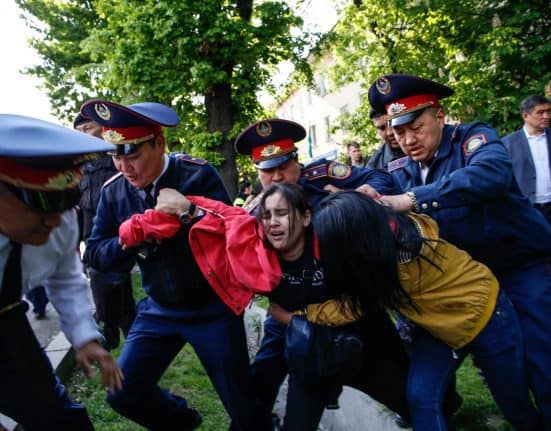
The conclusions of the opponents are disappointing for civil society: the adoption of the law in its current form without additional legal analysis will naturally raise objections from international human rights organizations. Arbitrary interpretation of the law by employees of the Ministry of Internal Affairs will certainly lead to abuse and violence. One of the commentators resented by the law actually banning rallies, drawing an analogy with the Soviet past.
Earlier, ACCA posted about network activist Maxim Chernikov. He applied to the virtual reception of the president, the Ministry of Justice, the Ministry of Internal Affairs, and the Tashkent city administration with a question about holding rallies. As a result, rallies are not allowed, and in the response of the Ministry of Internal Affairs, appeared a legislative act of 1988.




Leave feedback about this