
The authorities of Turkmenistan still do not recognize the presence of COVID-19 in the country. The number of deaths from coronavirus in the country is growing every day. A grave situation has arisen in the country’s prisons, where there are no protective equipment and medicines.
The ACCA journalist managed to interview one of the citizens, who was forced to buy the body of his deceased brother from the prison staff.
– Tell me please, how did you know that your brother is sick?
– My brother and I called each other almost every day, then he just stopped calling. Twenty days after his last call, an unknown person called me and asked on behalf of my brother to send 600 manats (about $ 200) for medicines. Although my brother was thin, he rarely got sick and did not complain about his state of health, and then they called and said that my brother was very bad and he could not walk, he was constantly lying, he had a fever and difficulties in breathing. At first, I refused to send money, but then the phone was passed to my brother, and he personally told me that he really needs it. I sent money and wanted to visit him, they told me that they would not let me in due to a strict quarantine.
– Did your brother tell you what his diagnosis was?
– Yes, he told me that the doctors diagnosed him with pneumonia.
– Do you know what medications your brother was treated with, which ones were prescribed, and was he connected to a lung ventilator?
– No, when they called me the second time, my brother had already died.
– Tell me please, who called you and what he/she said?
– It was an employee of the colony. He said that my brother had died and that he will be buried near the colony. Of course, I wanted to arrange a funeral at home and our father really asked to bury my brother close to the house, but the calling officer objected to me and referred to some oral order of the Minister of the Ministry of Internal Affairs that the dead patients from pneumonia should not be given out to relatives for burial, but immediately suggested to solve this issue for $ 300. I agreed.
– Under what circumstances did you take your brother’s body?
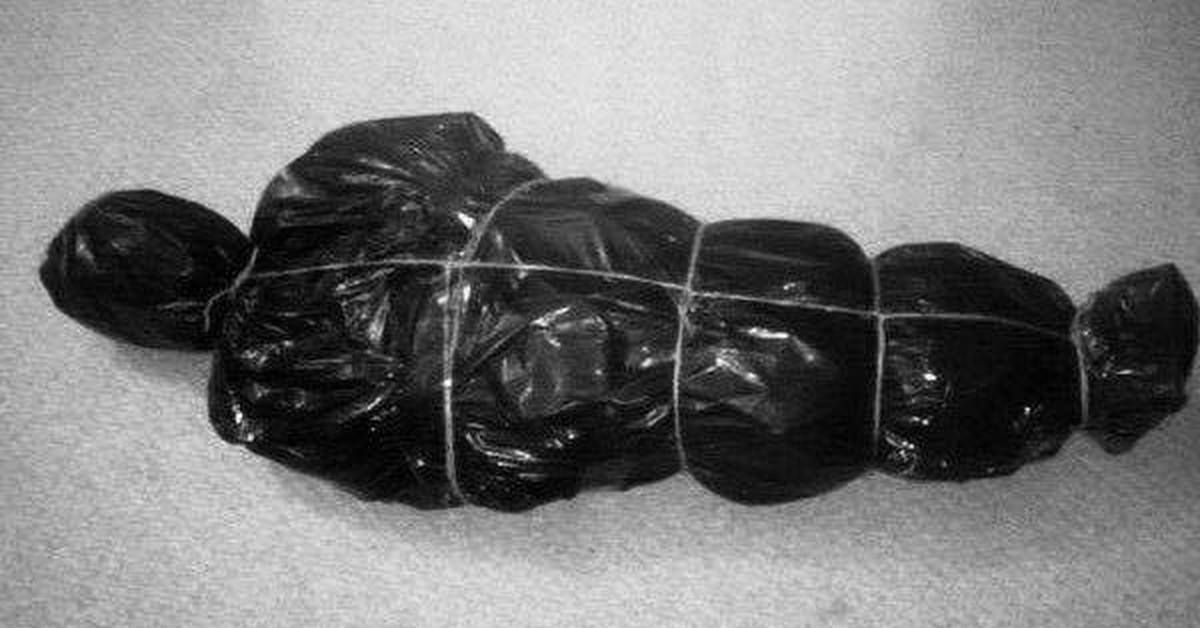
– I came to the checkpoint of the colony and asked to call the officer who called me. He came out about 40 minutes later and told me to bring 20 meters of canvas (canvas is used to wrap the body of the deceased, usually a maximum of 6-7 meters is ordered for funerals), 4 bottles of cleaning agents, five large, black garbage bags, a roll of scotch tape and a package of medical cotton. I went to the nearest settlement and bought everything I needed, gave it all to the officer, and gave him $ 300. The officer warned that the body and canvas must be disinfected and buried on the same day, without violating the integrity of the packages. He warned me that if we open the package, the whole family will die. Then he said that he needs to go and hand everything over to the medical staff so that they could prepare my brother’s body for transportation home. I was told to wait for a truck on the road by two in the morning. We arrived at the place at 1 am, waited an hour and a half, and then a truck drove up, the same officer got out of it and told us to take the body. I climbed into the back of the car, it was a garbage truck, where besides the body of my brother there was another one. A friend of mine pulled his car tightly next to a truck and helped to move my brother’s body. After that, the officer demanded that we be the first to leave this place. In the morning we arrived home, and the next day we buried my brother.
Prison deaths on the rise
ACCA journalists managed to find out that in the colonies of Turkmenistan there are no protective equipment, medicines, disinfection solutions, gloves, ventilators, etc. Prisoners in colonies can order medicines for themselves from home. Also, they are forced to ask their relatives to send chlorine-containing solutions, and 10% is deducted from the salaries of prisoners for the purchase of chlorine. We also learned that prisoners in the colonies are re-infected with COVID-19. Our source close to the Department of Corrections of the Ministry of Internal Affairs of Turkmenistan said that not a single colony received aid from the two tranches allocated by the United States to Turkmenistan to fight against COVID-19. The colonies also received nothing from the humanitarian aid provided by the World Health Organization and the United Arab Emirates. The ACCA journalist collected new data on some colonies in Turkmenistan. Taking into account the fact that after our first publication on the number of deaths in the colonies of Turkmenistan, the special services began to tightly control the employees of the penitentiary system to prevent information leakage. Therefore, we were unable to collect information for all institutions.
Akhal velayat
1) AG-D/1 remand center in Yashlyk; designed for 300 people, contains 680, density – 0.88 sq / m per person. Deaths from pneumonia 2.
2) Ovadan-Depe prison complex, includes; a) remand center of the Ministry of National Security, b) Prison AH-T/2 and maximum security prison AH-K/3. The whole complex is designed for 1250 people, contains 4000, density – 0.62 sq / m per person. Deaths from pneumonia were 12, became 21.
3) AH-P / 4 LTP in Tejen; designed for 200 people, contains 430, density – 0.93 sq / m per person. There is no data on the number of deaths from pneumonia.
4) AH-K / 6 Special regime colony in Tejen; designed for 800 people, contains 2650, density – 0.60 sq / m per person. Deaths from pneumonia were 19, became 27.
Balkan velayat
1) BL-D / 9 remand center in Balkanabat; designed for 200 people, contains 610, density – 0.65 sq / m per person. There were 22 deaths from pneumonia. No new data could be obtained.
2) BL-H military disciplinary battalion; designed for 800 people, contains 1400, density – 1.14 sq / m per person. There are no data on the number of deaths from pneumonia.
3) BL-K / 4 Specialized colony for former employees of the security forces of Turkmenistan (red zone) in Turkmenbashi; designed for 650 people, 1550 are kept, density – 0.83 sq / m per person. Deaths from pneumonia were 8, became 21.
4) BL-P / 22 Medical-Labour Centre in Bekdash; designed for 200 people, contains 260, density – 1.53 sq / m per person. Data on death from pneumonia could not be obtained.
5) BL-D / 5 remand center in Turkmenbashi; designed for 200 people, contains 470, density – 0.85 sq / m per person. Deaths from pneumonia were 15, became 19.
Dashoguz velayat
1) DZ-D / 7 Detention facility outside the city of Dashoguz; designed for 250 people, contains 700 people, density – 0.71 sq / m per person. Deaths from pneumonia 4.
2) DZ-K / 8 Dashoguz female colony: designed for 1000 people, about 2000 detained, density per sq / m – 1 prisoner. Deaths from pneumonia were 8, became 11.
Lebap velayat
1) LB-K / 10 maximum-security colony in Turkmenabat; designed for 450 people, accommodates 1120 people, density – 0.8 sq / m per person. 11 people died of pneumonia. Failed to receive new data.
2) LB-K / 11 Seydi maximum security colony; designed for 700 people, accommodates 2700 people, density – 0.51 sq / m per person. There were 19 deaths from pneumonia, now 30.
3) LB-K / 12 Seydi General Regime Colony; designed for 850 people, contains 3700, density – 0.45 sq / m per person. Deaths from pneumonia were 24, became 38.
4) LB-P / 21 Medical-Labour Centre in Karadamak settlement is designed for 200 people, contains 310, density – 1.29 sq / m per person. There is no data on the number of deaths from pneumonia.
Mary velayat
1) MR-D / 14 remand center in Mary; designed for 250 people, contains 710, density – 0.70 sq / m per person. Deaths from pneumonia 2.
2) MR-B / 15 Central prison special hospital, Mary (Mary-GRES); designed for 550 people, 200 beds for ordinary patients, and 350 beds – a tuberculosis block of 4 buildings fenced with a barbed wire fence, contains 1150 patients, density – 0.95 sq / m per person. The number of deaths from pneumonia was 36, became 51.
3) MR-K / 16 High-security colony in Bayramali; designed for 1000 people contains 3600, density – 0.55 sq / m per person. Deaths from pneumonia were 29, raised to 41.
4) MR-K / 17 Colony-settlement of Mary; designed for 200 people, contains 820, density – 0.48 sq / m per person. There were 14 deaths from pneumonia. No new data could be obtained.
5) MR-K / 18 Colony for minors in Bayramali; designed for 800 people, contains 2400, density – 0.66 sq / m per child. Deaths from pneumonia were 13, raised to 15.





Leave feedback about this