
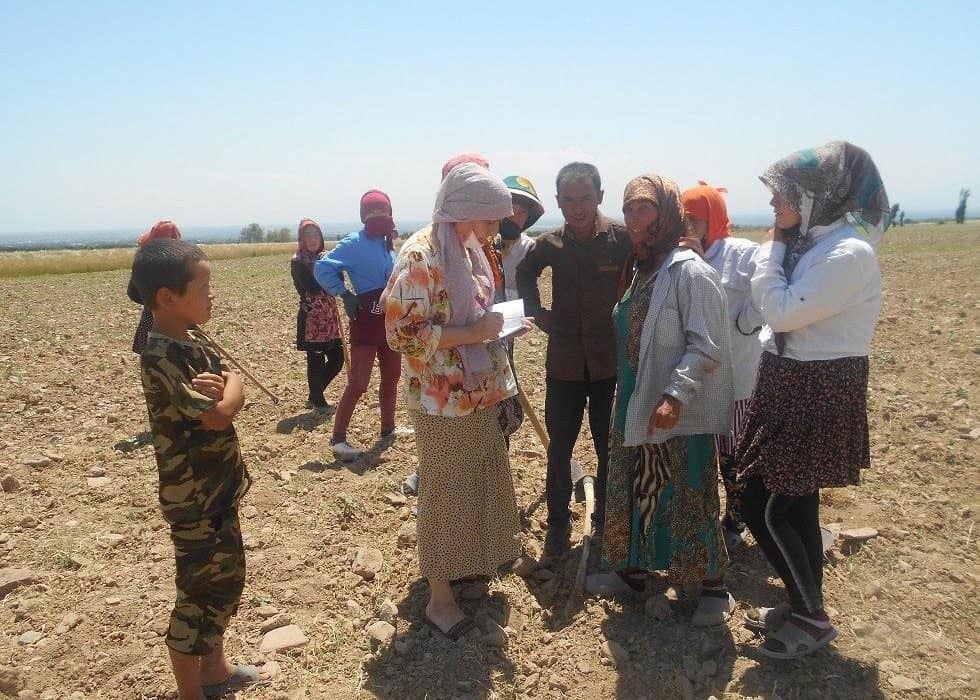
Uzbek human rights activists have recorded the use of child labor in cotton fields in Namangan region.
On May 31, civil activists from the village of Chodak and representatives of the Human Rights Alliance of Uzbekistan held a joint action in Papskiy district. During the raid, they saw teenagers who were weeding. Mainly girls of 15-18 years old worked in the field.
Human rights activists found out the labor schedule of young agricultural workers. It turned out that the working day is from 7.00 to 17.00 with a break for a meager lunch. A particular concern of farmers is the requirement to wear synthetic masks to prevent coronavirus infection. According to meteorological data, these days the temperature exceeds +40°C in the shade, and on the earth heated from the sun, it’s at least +55°C.
For work in such conditions, teenagers receive no more than 30 000 sums ($3) per day. The legislation prohibits concluding labor contracts with minors; it even focuses on the complete elimination of child and forced labor in Uzbekistan.
In an interview with an online publication, First Deputy Minister of Employment and Labor Relations, Erkin Muhiddinov, noted that “unemployment rates were high, and during the pandemic they increased. The number of unemployed has grown by almost 2 million people.”
According to the logic of the Deputy Minister, there should be no shortage of manpower in regions with excessive labor resources, such as the regions of Ferghana Valley.
“Adults are not satisfied with such hard and low-paid labor. Officials of all levels know about the teenagers’ agricultural work and keep back the truth. There is a reaction, when activists make such cases public. Social support is clearly insufficient, so the children are forced to go to the plantations with the direct connivance of the authorities to help parents and save at least some funds for their needs,” – concludes an ACCA’s expert.


Leave feedback about this