
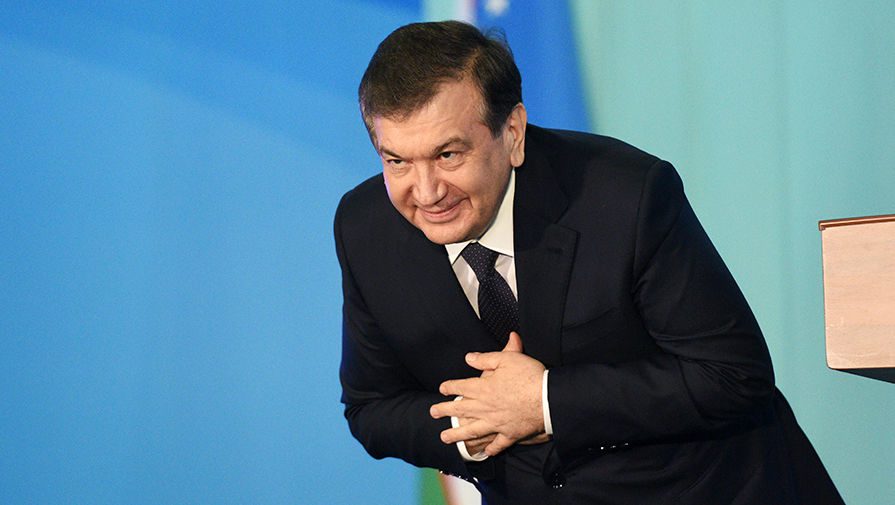
On October 30, the President of Uzbekistan Shavkat Mirziyoev signed the Decree on transforming the Independent Institute for monitoring the formation of civil society into the Center for the development of civil society. The Center’s director is now also the deputy head of the President’s civil society advisory board. There is a bureaucratic conflict: by the end of the year, the Center should prepare a report on the state and development trends of civil society for the same Council.
The Center has the status of a non-governmental non-profit organization, but according to the Presidential Decree from November 1, its employees’ salaries will be increased. The main funding is provided from the Public Fund for the Support of NGOs and other civil society institutions under the Parliament.
The heads of state bodies are charged with the obligation to provide the Center with the requested information and provide comprehensive support. Projects implemented in the country, affecting the rights and legitimate interests of civil society institutions, are now necessarily coordinated with the Center. At the beginning of the year, the preferences from the Prime Minister Abdulla Aripov were received by another nationwide movement “Yuxalish”, whose chairman by status has the rank of minister.
Independent researcher Alisher Ilhamov, in his commentary for ACCA, noted that “neither the Independent Institute for monitoring the formation of civil society nor its reincarnation, in the form of the Center for the development of civil society, actually hadn’t and doesn’t have a subject of activity. “It’s the same as if Uzbekistan created a Center to establish links with extraterrestrial civilizations,” Ilhamov said. “The absurdity of the status of both organizations (the Independent Institute for monitoring the formation of civil society and the Center for the development of civil society) consists in the fact that an organized civil society has been damaged in the country long time ago.”
The researcher recalls how more than 200 non-governmental organizations were closed or self-liquidated by the authorities in 2004-2007. Representatives of the government in the person of Akmal Saidov, the director of the National Center for Human Rights (no less absurd organization than the Independent Institute for monitoring the formation of civil society) at each international forum insisted that there were 6-8 thousand non-governmental organizations in the country. However, a list of these NGOs has never been published. According to reports, almost the entire list is made up of mahalla committees, branches of government-controlled unions and the so-called GoNGO – public organizations created by the government or controlled by it.
Ilhamov is sure that the Independent Institute for monitoring the formation of civil society was created with only one goal – to control the so-called third sector (in fact, its remains) and to finance the “NGOs” controlled by the authorities. “This was and is a structure of political control, not support of civil society,” the expert emphasizes.
The country still has a licensing mechanism for registering NGOs, while in more free societies, the authorities simply technically register organizations. In addition to obstacles to registration, there are also a number of restrictions on the activities of civil society organizations. So, to receive a grant from international donors, you need to get permission from the commission, which was created under the Central Bank. And this commission is actually controlled by the State Security Service. In addition, the Ministry of Justice obliges registered organizations to coordinate planned activities with them, thereby limiting the freedom of activity.
Meanwhile, truly initiative organizations are not allowed to work, as it is extremely difficult, almost impossible for them to register. For example, the Ministry of Justice has again refused to register a human rights organization created by former political prisoner Agzam Turgunov.
Alisher Ilhamov claims “the third sector has practically not formed in the country, and there are only a scanty number of truly initiative civil society organizations. For this, the country pays a high price, because its development is impossible without the active participation of civil society, without their control over the activities of state bodies. Hence it follows the arbitrariness that these bodies create everywhere”.
The head of one officially registered non-governmental non-profit organization, in the interview with ACCA, stated that “a large bureaucratic system of pseudo-activity and pseudo-volunteering is being created, which international donor organizations will also reckon with. It will be increasingly difficult to get support from really working organizations. The authorities clearly defined the ideological rather than the social essence of civic passion and have already put the media and the blogging community at the service of their interests, and now active activists have to make a moral choice. This is what the country’s eco-organizations did in their time, suppressing disgust at the creation of a completely discrediting Ecological Movement of Uzbekistan”.
The leader of the women’s human rights initiative group Tatyana Dovlatova admits the positive effect of creating a new structure. “There is a timid hope for real help from this Center. Independent human rights defenders are becoming less and less in the country; young people are not going to human rights protection. If this Center helps, for example, creating and including us in a public council under the Ministry of Internal Affairs with the functions of free monitoring of the rights of prisoners, then I would only welcome it.”


Leave feedback about this