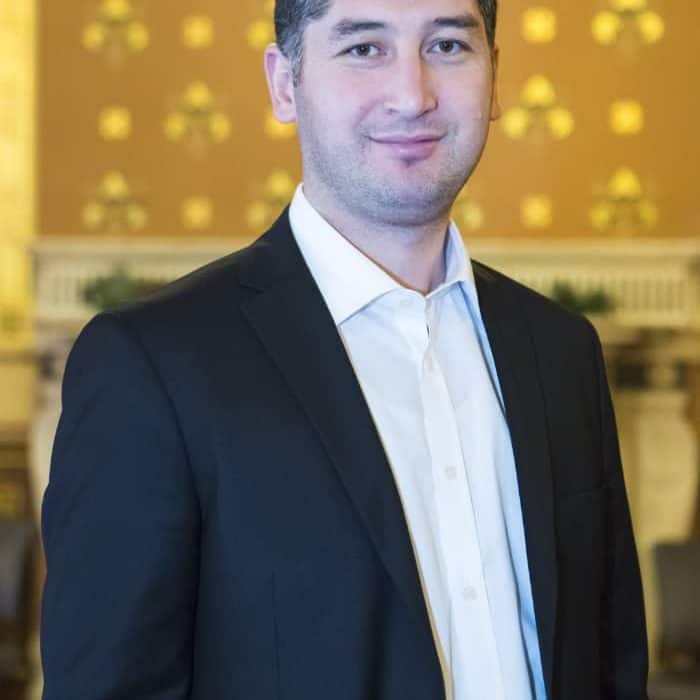
About why victims of torture in Kyrgyzstan are paid meager compensation and how to solve the problem of violence against women, we talked with the lawyer of the Public Foundation “The Center for Strategic Litigation” Sardor Abdukhalilov.
– How effectively does Kyrgyzstan as a state implement the decisions of the UN Human Rights Committee?
– Kyrgyzstan is a member state of international human rights treaties, within which it has recognized the competence of mechanisms that are authorized to consider individual communications about alleged violations of the rights enshrined in the relevant treaties. To date, the UN Human Rights Committee and the UN Committee on the Elimination of Discrimination against Women have issued more than forty decisions regarding our country. Most of them concern, first of all, the solution of those issues on which a systematic, coordinated approach is required for the adoption of measures of a general nature. These issues affect a large number of citizens, are related to the conditions of detention in places of deprivation of liberty, and the problems of investigating torture, cruel treatment of detainees, guaranteeing individual rights in criminal proceedings, and ensuring fundamental rights to a fair trial. However, one of the main problems at the legislative level is the failure to provide the necessary mechanisms for legal regulation of the implementation of decisions and recommendations of treaty bodies. In this regard, the main reason for the ineffective implementation of the decisions of the UN treaty bodies is the lack of effective mechanisms and procedures to ensure prompt implementation.
– Why do victims of torture in Kyrgyzstan receive such meager compensation from the state?
– One of the points regarding the implementation of the decisions of the UN Human Rights Committee is the issue of compensation, which should have been adequate to the gravity of the human rights violation. According to the norms of the Civil Code, compensation must be reasonable and fair, but in practice we see that victims of torture receive compensation arbitrarily calculated without any justification. The largest compensation, paid by the state for depriving a person of life, was 300,000 KGS (less than $4,000). This is not enough if we take into account the severity of the harm, but the courts or the state in their person evaluate the life of a person or the severity of a crime against human rights in this way. Why this is so, I don’t know. I don’t know if there is some sort of unofficial evaluation table inside the judicial corps. But I know that this amount is not enough. So, if we do a comparative analysis of defamation suits, in which the courts collect multimillion-dollar penalties from individuals, when it comes to the honor and dignity of the president or some other officials, then we clearly see that in our country reputational matters are much higher than a violation of human rights.
– What should be done to change the situation?
– In order for the situation to change, I think it’s necessary that tolerance in society regarding violations of human rights should be zero.
– What should the state do so that all citizens know their rights?
– Knowledge is one point, culture is another one. That is, you can know the rules of the law, but not adhere to these rules. In this matter, the role of society is not the last. What is society, such is the state. And if society demands that the state comply with the rules that protect the rights of every person, if society itself encourages orderliness and resist lawlessness, then the state will respond to the needs of society in one way or another. I think that here we should look at how our society is ready to adhere to and protect these norms. I think that if we raise the legal awareness of our citizens, if our society is intolerant of any manifestations of abuse of power, if society demands the observance of democratic institutions, then state institutions will become clear and issues of human rights violations will disappear by themselves. In fact, torture, like any other form of human rights violation, is a side effect of those systemic problems that exist in the dialogue between society and the state. The authorities, represented by state bodies, allow themselves to violate human rights, because, according to an unspoken agreement between society and the authorities, these manifestations are considered normal.
– How can violence against girls and women be stopped in Kyrgyzstan?
– This simple question requires complex answers. What should be done? I think that there is not only a legal side, but also a socio-cultural, psychological one. In many ways, this is not a matter of law, but a matter of human relations and the value system of society. I believe that such problems have existed and exist in all societies. I can say that, on the one hand, we must focus not only on the fact that women’s rights must be realized and protected at the state level, but also by private individuals. On the other hand, public institutions should demand that any manifestation of violence against women be condemned and those responsible punished. That is, society should be intolerant of any manifestation of violence. I must say about the effectiveness of state mechanisms and legislative procedures that are designed to protect the rights of women. As a result, we again return to the question of the effectiveness of the institution of power, which is obliged to realize these rights and freedoms.
– Are human rights a problem only for non-democratic countries?
– Where there is a state, the question of observance of human rights always arises. I can say that in those societies where the institutions of power work effectively and the principles of a democratic society are observed, where the society is intolerant of any abuse by the authorities, human rights are respected and implemented. The right to be elected, that is, the change of power, an independent court, predictable or legal certainty, a strong civil society – all these points affect the fact that society requires the state to comply with clear rules of the game. But I can definitely say that even in the most developed countries, the observance of human rights has always been a sensitive issue, and public institutions there always demand that the issues of observance of rights and freedoms be of a systemic nature.
– What do you think will happen to human rights in Kyrgyzstan in the future?
– It depends on many factors. At the same time, the key factor is how ready society itself is to protect its members, that is, units, how tolerant or intolerant it is of violations, how developed legal nihilism is in our country. In other words, progress in respect of human rights will depend on the extent to which the society itself will be ready to defend them.
– Have you ever faced harassment (threats) because of your professional activities? How did you deal with this situation, if there was one?
– All lawyers and human rights activists, who work in the field of human rights, should be ready for the fact that they may be persecuted or threatened. This is a side effect of our work. Sometimes the threat may come from individuals, in some cases – from representatives of state bodies. Yes, there is a risk, of course, but it can be minimized. You need to follow security measures. It must be remembered that if you have got down to some high-profile case, then you must be ready that dirty methods can be used against you.
– Tell me, please, what is the relationship between the authorities and human rights activists today? Is this a confrontation or cooperation?
– It depends on the situation. There is a working dialogue between the authorities and human rights activists. And this is good, it shows the openness of state bodies. Meetings are held at different levels; a working dialogue has been established. At the same time, you need to understand that the non-governmental sector is not only human rights activists, but also NGOs working in other areas, such as education, healthcare, and so on. And, in my opinion, they provide a huge service to both the state and society in increasing the effectiveness of compliance with the rules of the game that were mentioned.