Events from June 26 to July 2 culminated in a bloody finale in Nukus when the protests were violently suppressed by special forces soldiers. They were promptly delivered to the capital of Karakalpakstan by military aircraft. Official Tashkent considered local law enforcement officers insufficiently loyal and unprepared for forceful suppression.
Groups of young people tried to storm the buildings of the local Supreme Council (Jokargy Kenes), the Central Internal Affairs Directorate, and the National Guard. Automatic weapons fire was heard.
The Prosecutor General’s Office presented its version of events. As a result of riots in Nukus, 243 people were injured, including 38 law enforcement officers; 18 people died as a result of their injuries; 516 people were detained. Currently, 94 patients are being treated in hospitals, some of them are in critical condition.
Lots of videos have appeared on the Internet in which men in black uniforms beat women with truncheons. The detention facilities of law enforcement agencies are overcrowded, so some of the detainees were taken 200 kilometers to Urgench, the administrative center of the Khorezm region.
Detentions of identified protesters are still ongoing. “They are being hunted all over Karakalpakstan,” one of the local activists told ACCA. – In Nukus, water-jet vehicles sprayed crowds with colored water. Then those marked, and among them were just passers-by, were put into paddy wagons.” In Tashkent, the police also began detaining Karakalpak activists.
There is evidence that Dauletmurat Tazhimuratov, an authoritative leader of public opinion in Karakalpakstan, is also in Khorezm. Before the second arrest on July 2 (the day before after the first arrest, he was released at the request of the crowd), he was beaten by the security forces. Now he is either in the hospital or in prison.
At the time of writing, the fate of the editor-in-chief of the Karakalpak publication Makan.uz, Lolagul Kallykhanova, is unknown. As her sister Aigul managed to tell Uzbek human rights activists, Lolagul was still in touch at 23:00 on July 1 and disappeared five hours later. The content of her telegram channel has not been updated since 17.00.
Before the disappearance, the journalist managed to spread an appeal for help to international organizations and embassies. She wrote the following “Dauletmurat Tazhimuratov wanted to hold a peaceful rally on the withdrawal of Karakalpakstan from Uzbekistan. And for this, he wanted to gather the inhabitants of the region on July 5 at 5 pm at Zhokorgi Kenges. After his video, the situation escalated sharply.”
Both ideological inspirers of the protest and their followers face a sentence of imprisonment from 5 to 8 years.
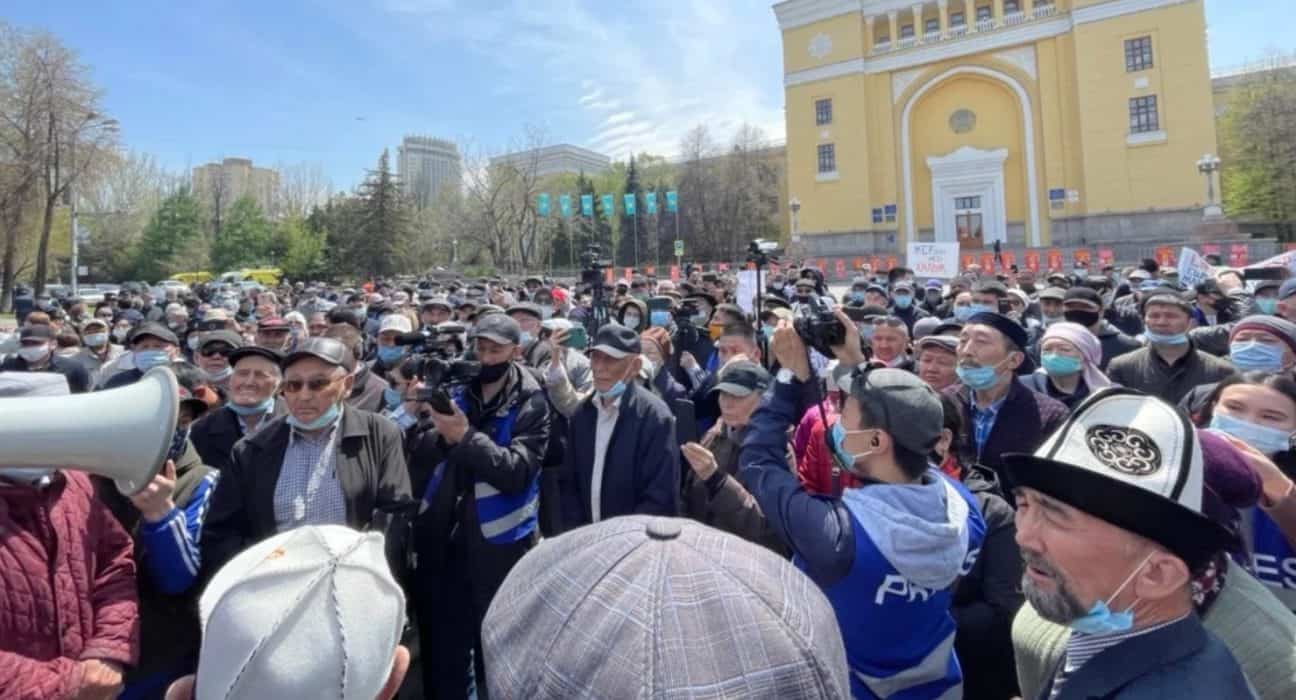
Protesters became active in the late afternoon of July 1, when a daytime rally in Nukus ended peacefully after a joint speech, already released after the first detention of Dauletmurat Tazhimuratov and Murat Kamalov, head of Jokargy Kenes. At least 25 thousand residents of Nukus and regions gathered in the city square. Later, the deputy speaker of the Legislative Chamber of the Oliy Majlis (Parliament of Uzbekistan), the press secretary of the constitutional commission, Odiljon Tajiev, will call them provocateurs and populists.
Violence then affected both sides of the confrontation. Tear gas was used, and the special forces opened fire with rubber bullets, used smoke bombs, and stun grenades. All this led to numerous injuries. The protesters captured several fighters, threatened them with death, and threw stones at the attacking commandos, and beat them with improvised means. The doctors of the Emergency Medical Center and hospitals found themselves in a difficult position, as the flow of the wounded was continuous. Many wounds after the shots were in the back.
The unrest in Nukus has caused serious concern in neighboring Turkmenistan. Special forces have been deployed from Ashgabat to Dashoguz – police and border guards from other regions. The postponement of the visit to Tashkent of the President of Turkmenistan Serdar Berdimuhamedov, which was announced the other day, is not ruled out.
The authorities of Karakalpakstan announced an attempt to seize state administration bodies. It is not known what was the reason for the complacent behavior of the president, but he quickly flew to Nukus on the evening of July 2, where he announced the preservation of articles 70, 71, 72, 74, and 75 of the Constitution of Uzbekistan, which ensure the sovereignty of Karakalpakstan. A few hours later, a presidential decree appeared on the introduction of a state of emergency in the territory of Karakalpakstan for the period from 00:01 on July 3 to 00:00 on August 2, 2022. On July 3, Mirziyoyev flew back and held a videoconference with the activists of the districts of Karakalpakstan.
The president named the deputies of the Jokargy Kenes of Karakalpakstan as the culprits of the events. Allegedly, they themselves proposed and approved amendments to the Constitution on the status of the republic. He surprised the citizens of the country by complaining in his speech that no one called him and said about the discontent of the people.
The ACCA expert has no doubts about Mirziyoyev’s exceptional awareness, the depth of the analysis of the Security Council, and the reports of law enforcement agencies before the publication of amendments to the Basic Law. It is difficult to accuse them of political incompetence.
“I am sure that the lawyers of the constitutional commission for the formation of proposals for amendments to the Basic Law were well aware of the danger of depriving, albeit illusory, but sovereignty. “The Karakalpaks considered this a national humiliation,” the expert believes. “Even the former President Karimov could easily allow shooting at Andijan protesters 17 years ago, practically not reacting to the marginalized from among the Karakalpak intelligentsia, upset by the deteriorating position of the language and culture due to influence, as well as the growth of the Uzbek population. Most likely, the president and his associates decided to finally close the Karakalpak issue in the region, which occupies 37 percent of the territory of Uzbekistan. The Karakalpak population gravitates towards a more related ethnic group in Kazakhstan. Hence, in particular, the mention in the statement of the authorities of Karakalpakstan about some “separate unhealthy external forces from abroad.”
Chairman of the Jokargy Kenes Murat Kamalov, before his new position, served as head of the state security service of Karakalpakstan, which constantly hunts for opposition activists. He, like no one else, understood the danger of the amendments and did not dare to object to the authorities from Tashkent. On June 20, President Mirziyoyev, at a meeting with members of the constitutional commission, proposed adopting amendments to the Constitution through a referendum. It is clear that the draft law with important changes to the Constitution for the leader of the country has been carefully and long ago prepared.
The media sphere reacted with extreme restraint to the events that shook the whole country. Bloggers and independent journalists are more outspoken.
The leading online publication Gazeta.uz, in order to avoid hate speech, turned off comments under publications. The opposition publication Eltuz.com and quite loyal to the government resource Kun.uz showed unique solidarity in their support for the indivisibility of Uzbekistan. In the Uzbek media, as if in reproach to the protesting Karakalpaks, statistical data are given on the successful socio-economic situation in Karakalpakstan, from which the reader should draw conclusions about the flourishing of the regional economy.
Aleksey Volosevich, editor-in-chief of the independent website Asiaterra.info, believes that “an attempt to deprive Karakalpakstan of signs of sovereignty caused a real surge of chauvinism among ethnic Uzbeks, who suddenly began to vied with each other in favor of the “territorial integrity of Uzbekistan” (like the Kyrgyz who staged pogroms against Uzbeks in 2010, or the Chinese sending Uighurs to re-education camps today).
“Theoretically-legal side of “sovereignty” and “referendum on withdrawal” are now secondary. Legal and procedural issues, the interaction/attitude of the state (officials) towards a certain part of the population in such sensitive areas, and human aspects come to the fore. With a simple stroke of the pen, without warnings and discussions in different formats, without the position of the Constitutional Court and the participation of the people of Karakalpakstan directly, in the form of several amendments among 200 changes, 10 days were given for thinking” – assesses the situation Diora Madulloeva, a graduate of the London School of Economics and Political Science. She reacted critically to the bill, considering it impossible to submit it for public discussion at all.
While the community of analysts, journalists and bloggers is wondering about the cause of the truly deadly changes to the Constitution, Karakalpak activist Murat Ubbiniyazov turned out to be right in predicting subsequent events. In his commentary to ACCA on June 28, two days after the publication of the bill, the human rights activist revealed the essence of legislative excess, “Initially, all changes to the Constitution had a specific goal – to increase the term of the presidency and zero the presidency, after which the incumbent president could be re-elected to this position. Therefore, I suppose that one of these days, perhaps the president himself, perhaps his press service, will make a statement that the changes regarding the Republic of Karakalpakstan are unlawful.”
“Of course, there will be more “carrots” from the president in the form of all kinds of benefits and preferences, but they will not make the Karakalpaks forget the massacre of the special forces and the arrogance of Tashkent officials, their own dignity and the cowardly behavior of their own elite,” the ACCA expert sums up.