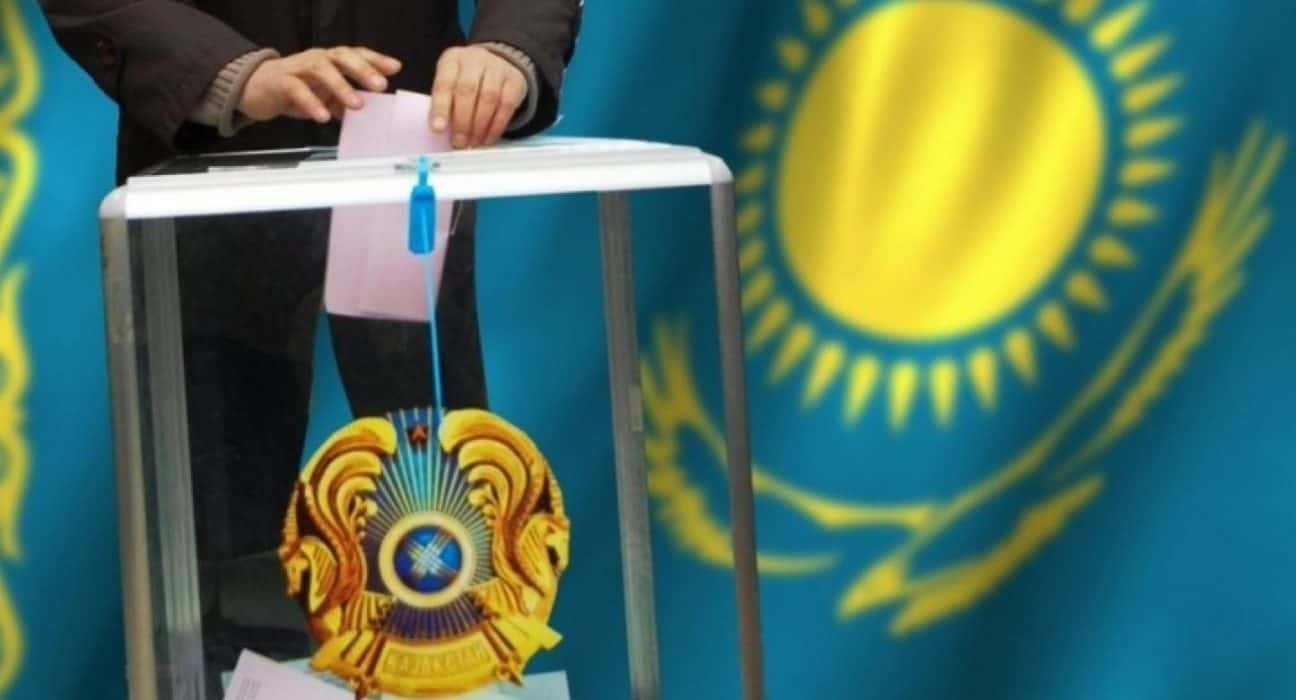
There were some violations at the referendum, which was held in Kazakhstan on June 5 concerning the issue of amending the Constitution.
As ACCA has already reported, the mission of observers from the CIS countries officially stated that the referendum was held at a high organizational level and that the few and minor violations were of a technical rather than fundamental nature. However, the results of the monitoring conducted by the Kazakhstan International Foundation for the Protection of Freedom of Speech “Adil Soz” indicate that the assessment of the mission of observers from the CIS countries is somewhat overestimated.
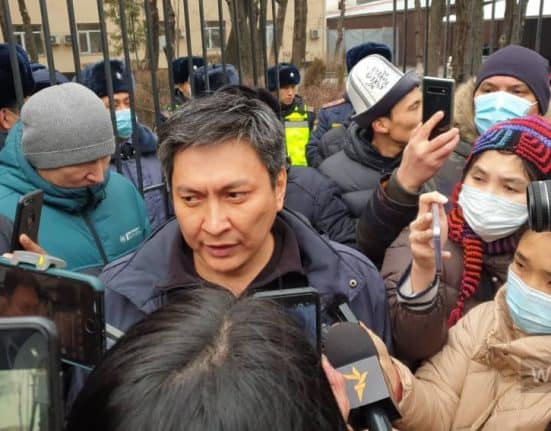
According to the Foundation, 9 facts of violations of the rights of journalists were registered. The rights of journalists of Radio Azatyk were violated the most.
So, for example, the film crew of Radio Azatyk was not allowed to go to polling station No.59 in the city of Nur-Sultan, where President Kassym-Jomart Tokayev voted. The police told the journalists that their names were not on the list of accredited media, although Azatyk said that all documents necessary for accreditation were sent to the Ministry of Information and Social Development in advance. Adil Soz also noted that in addition to Azatyk, journalists from Channel 7 and the Ulysmedia were not allowed to enter the polling station.
In Almaty, according to monitoring data, the rights of journalists at polling station No.257 were violated: the chairman of the election commission forbade them to film inside the polling station.
Orda.kz journalist Maria Gorbokonenko was also subjected to discrimination when she arrived at polling station No.2 in Almaty, where, according to some reports, there was ballot stuffing.
“The chairman of the polling station at first made a remark to the journalist of Orda.kz that it was necessary to indicate the specific number of the polling station in the editorial task. Then the woman forbade taking pictures inside the polling station, and then she didn’t allow to talk with the observers at all,” Adil Soz reported.
In Shymkent, they didn’t want to let the reporter of Azatyk to polling station No.77. The chairman of the election commission demanded from him the original editorial task, that is, a written form with the seal and signature, and not its electronic copy. The situation was resolved only after the intervention of the chairman of the territorial election commission of the city of Shymkent Kaiyrbek Kunanbaev.
In Akmola region, another correspondent of Azatyk, Saniyash Toiken, faced the rude behavior of the chairman of the commission No.685, Sakypzhamal Slambekova. She demanded from journalists not to shoot inside the polling station and to leave its territory. Despite the appeal of journalists to the Central Election Commission and the promises of its employees to settle this issue, they were not allowed to the polling station.
However, the adventures of Saniyash Toiken didn’t end there. In the evening of the same day, at polling station No.142 in the capital, where the journalist arrived to film, one of the observers tried to snatch the camera from her hands, demanding not to film the observers.
Andrey Skiba, correspondent of Novaya Gazeta [New newspaper] in Kostanai, was put under pressure by members of the election commission. Members of the election commission forbade him to take photos and videos, referring to the protection of the secrecy of voting and personal data of citizens, and threatened to call security.
In the city of Rudny, journalist of Nasha Gazeta [Our newspaper] Ivan Leshchev, chairwoman of polling station No.170, Yelena Nekhayeva, refused to provide information about the number of voters, explaining that she had no right to disclose such information.
“The main reasons for these violations are the low knowledge of the rights of journalists by the members of the election commissions, as well as the Rules of accreditation of journalists, according to which the accrediting organization notifies the applicant in writing from and (or) electronically about the accreditation of a journalist only if the application is considered positive. Unfortunately, Article 126 of the Administrative Code “Obstructing the legal activities of proxies of candidates, political parties, representatives of the media and election observers” doesn’t work either. Therefore, alas, during the republican referendum “On amendments and additions to the Constitution of the Republic of Kazakhstan” on June 5, 2022, there were violations of the rights of journalists, although there were much fewer of them compared to a number of previous elections,” Adil Soz said on this occasion.