In Kazakhstan, on June 5, a republican referendum was held on the issue of amending the country’s main law – the Constitution. According to the Central Election Commission of the republic, more than 7.9 million citizens took part in the referendum, which is 68.06% of the total number of citizens eligible to participate in the referendum. Of these, 77.18% voted for the adoption of amendments to the Constitution, 18.66% were against. Thus, we can say that the amendments to the Constitution are a closed issue.
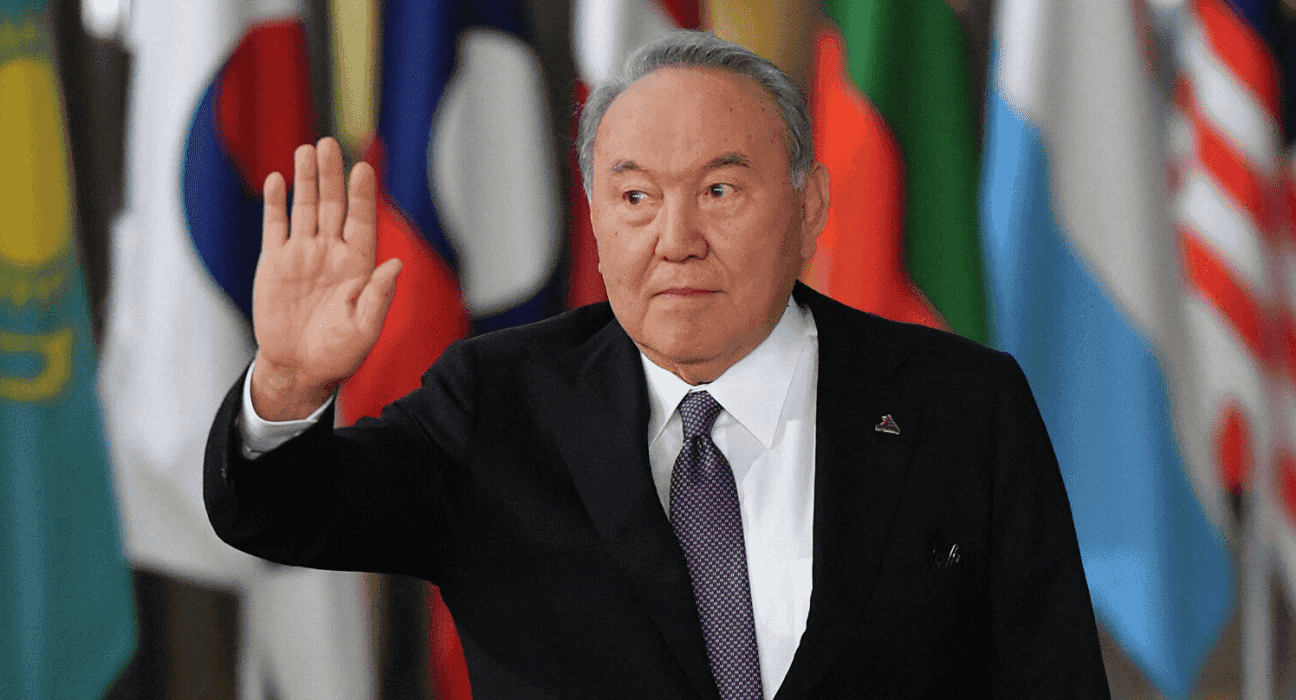
The main incentive to go to the referendum, perhaps, was the amendment concerning the first President of Kazakhstan, Nursultan Nazarbayev, or rather, deleting him from the Constitution.
It should be clarified here that in the very first version of the Constitution of Kazakhstan, adopted at the referendum on August 30, 1995, in the chapter “Final and transitional provisions”, paragraph 2 of Article 91 stated the following: “The unitarity and territorial integrity of the state, established by the Constitution, and the form of government of the republic cannot be changed.”
However, in March 2017, when the current President Nursultan Nazarbayev, in addition to numerous awards and orders, already had the status of the Leader of the Nation, Article 91 of the Constitution was slightly changed. Moreover, these amendments were made without taking into account the opinion of the people. No referendum was held.
On March 3, 2017, the bill was submitted for discussion to the Parliament. It was discussed at a joint meeting of the Committees of the Majilis (Lower House of Parliament) and the Senate (Upper House of Parliament). By the way, the Chairman of the joint commission, that considered the bill at that time, was Nurlan Abdirov (at the referendum on June 5, he was the Chairman of the Central Referendum Commission).
On March 6, 2017, that is, after 3 days, the bill was submitted for discussion at a joint meeting of both chambers of Parliament, which lasted less than an hour. The deputies unanimously voted in favor of amending the Constitution. On March 10, the bill was signed by Nazarbayev.
After the amendments, paragraph 2 of Article 91 began to look very complimentary in relation to Nazarbayev: “The independence of the state, the unitarity and territorial integrity of the republic, the form of its government, established by the Constitution, as well as the fundamental principles of the republic’s activity, laid down by the Founder of independent Kazakhstan, the first President of the Republic of Kazakhstan – Elbasy, and his status are unchanged.”
But the phrase “they are unchanged” is not about Kazakhstan. After the January events, in which people from Nursultan Nazarbayev’s inner circle were involved, the dominance of the first President in all spheres of the republic’s life disappeared. His relatives and associates began to be dismissed from their positions, or even brought to criminal responsibility.
So, they got to the first President too. On May 5, when it became known that the referendum on amendments to the Constitution was being held, it turned out that Nazarbayev himself no longer had a place in it. Among the amendments proposed by Nazarbayev’s successor, Kassym-Jomart Tokayev, was the one concerning paragraph 2 of Article 91. In particular, it was proposed to exclude everything related to the Leader of the Nation.
Paragraph 2 should be amended as follows: “The independence of the state, the unitarity and territorial integrity of the republic, the form of its government, the fundamental principles of the republic’s activities, established by the Constitution, are unchanged,” the draft constitutional amendments said.
This is what became the main motivation for citizens to take part in the referendum. In fairness, it is worth noting that there were other important amendments that appealed to the population. For example: the transition from a super-presidential to a presidential republic, which means a decrease in the level of power of the President and an increase in the power of Parliament and government; prohibition of the President (current and future) from membership in any party at the time of his duties; prohibition of relatives of the President to hold positions in the state and quasi-state sectors. In addition, it was proposed to rename the Accounts Committee into the Supreme Audit Chamber with a corresponding expansion of functions and powers, and also to create a Constitutional Court, which as an institution is currently absent in Kazakhstan.
It’s noteworthy that shortly before the referendum, the first President of Kazakhstan, Nursultan Nazarbayev, gave an interview in which he warmly supported the proposed constitutional amendments.
“I have always emphasized that the Basic Law of the country is not a frozen legal relic, but a living mechanism that reflects the life of Kazakhstani society and the changes which are taking place in it. Changes have been made before. In general, I believe that each generation has the right to make changes to the Basic Law, if this is an urgent need of the time and will contribute to the progress and democratic development of society. In 2019, I took a conscious step and, despite the objections of many people, I myself resigned from the post of head of state. I left at the peak of popular support for my course, as evidenced by the last presidential election in 2015, when I got 97.7% of the votes. In accordance with the Constitution, I transferred my powers of the President to the Chairman of the Senate, Tokayev Kassym-Jomart Kemelevich. In the subsequent popular elections, he won. All these years, I strongly supported his actions to reform and further develop our country. You can be sure that I will support him this time too,” Nazarbayev promised.
And he kept his promise. On June 5, he came to polling station No.115 and voted on the issue of amending the Constitution. Whether he supported the amendments or opposed is unknown. On the official website of Elbasy, on this occasion, only a short news was published that he went to the polling station.
As for Tokayev, according to him, June 5 was an important historical day for Kazakhstan.
“The people make a fateful decision. There is no compulsion. The referendum was organized at a high level,” the President said.
The absence of coercion and violations was also confirmed by observers from the CIS countries.
“There were a few and insignificant violations, more of a technical than a fundamental nature, which, in the opinion of the Mission, couldn’t have an impact on the results of the referendum. The voting procedure was held in accordance with the current legislation. The Mission of CIS observers believes that the referendum on amendments and additions to the Constitution of the Republic of Kazakhstan was held at a high organizational level,” said Leonid Anfimov, head of the Mission of CIS observers.
As for the attendance, the lowest activity of citizens was recorded in Almaty. There only 33.3% of citizens, who were included in the voting lists, took part in the referendum. This clearly indicates that Almaty continues to be a protest region of Kazakhstan.